


Compare Hybrid, On-Grid, and Off-Grid inverters to understand their features, costs, and backup capabilities. On-Grid inverters are cost-effective and ideal for homes with a reliable grid but offer no backup. Off-Grid inverters provide full energy independence, suitable for remote areas, but require larger batteries and higher investment. Hybrid inverters combine the advantages of both, managing solar generation, battery storage, and grid interaction intelligently. This guide helps homeowners and businesses choose the right inverter for savings, backup, and energy reliability.
Hybrid Inverter vs On-Grid vs Off-Grid: What’s the Real Difference?
Choosing the right inverter is critical for your solar system. The decision impacts backup power reliability, electricity savings, and long-term costs. This guide breaks down the differences between Hybrid, On-Grid, and Off-Grid inverters with practical advice for homeowners, businesses, and remote areas.
Hybrid vs On-Grid vs Off-Grid: Key Differences
| Hybrid | On-Grid | Off-Grid | |
|---|---|---|---|
| Battery Support | Yes ✅ | No ❌ | Yes ✅ |
| Backup During Outage | Yes ✅ | No ❌ | Yes ✅ |
| Works Without Grid | Yes ✅ | No ❌ | Yes ✅ |
| Upfront Cost | $2000–$6000 | $1000–$3000 | $3000–$7000 |
| Best Use | Home backup + savings | Grid-tied, low cost | Remote areas, no grid |
On-Grid Inverters
On-Grid inverters convert solar energy directly to AC and feed it to the utility grid. They are ideal for households aiming to reduce electricity bills without backup power.
- Pros: Lowest upfront cost, high efficiency, simple installation.
- Cons: No backup during outages, dependent on grid stability.
- Use Case: Urban homes with reliable grid, want maximum ROI.
Off-Grid Inverters
Off-Grid inverters operate independently of the utility grid and rely on batteries (and sometimes generators). Suitable for locations where grid access is unreliable or unavailable.
- Pros: Full energy independence; works in remote locations.
- Cons: Higher cost due to batteries; careful sizing required.
- Use Case: Rural homes, cabins, or areas with frequent outages.
Hybrid Inverters
Hybrid inverters combine the benefits of on-grid and off-grid systems. They manage solar generation, battery storage, home load, and grid export/import intelligently.
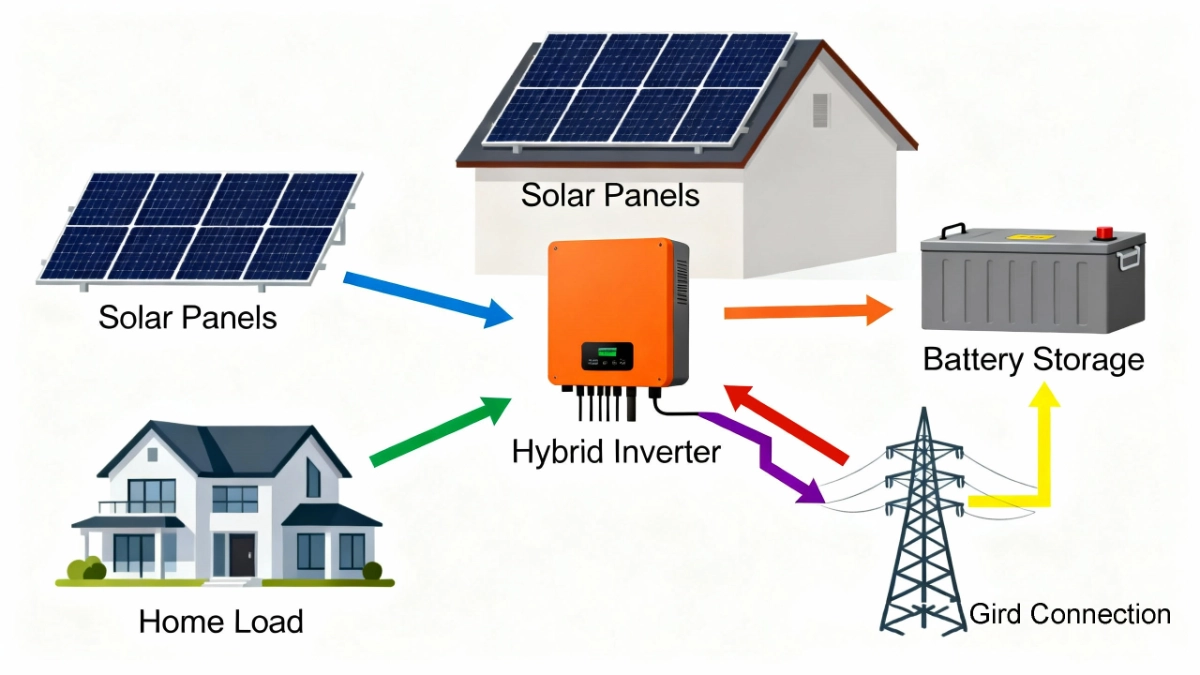
- Pros: Provides backup, reduces bills, flexible system management.
- Cons: Higher cost, slightly more complex installation.
- Use Case: Homeowners wanting both backup and savings, or small businesses.
Practical Differences
1. Battery & Backup
Hybrid and Off-Grid inverters provide backup power. On-Grid does not. Consider:
- Essential load hours (lights, fridge, WiFi)
- Battery capacity (kWh) required
- Automatic switching options
2. Grid Dependency
On-Grid depends on utility. Off-Grid is fully independent. Hybrid switches smartly between solar, battery, and grid.
3. Cost & ROI
On-Grid is cheapest with fastest ROI. Hybrid offers both backup and savings. Off-Grid cost depends on battery size.
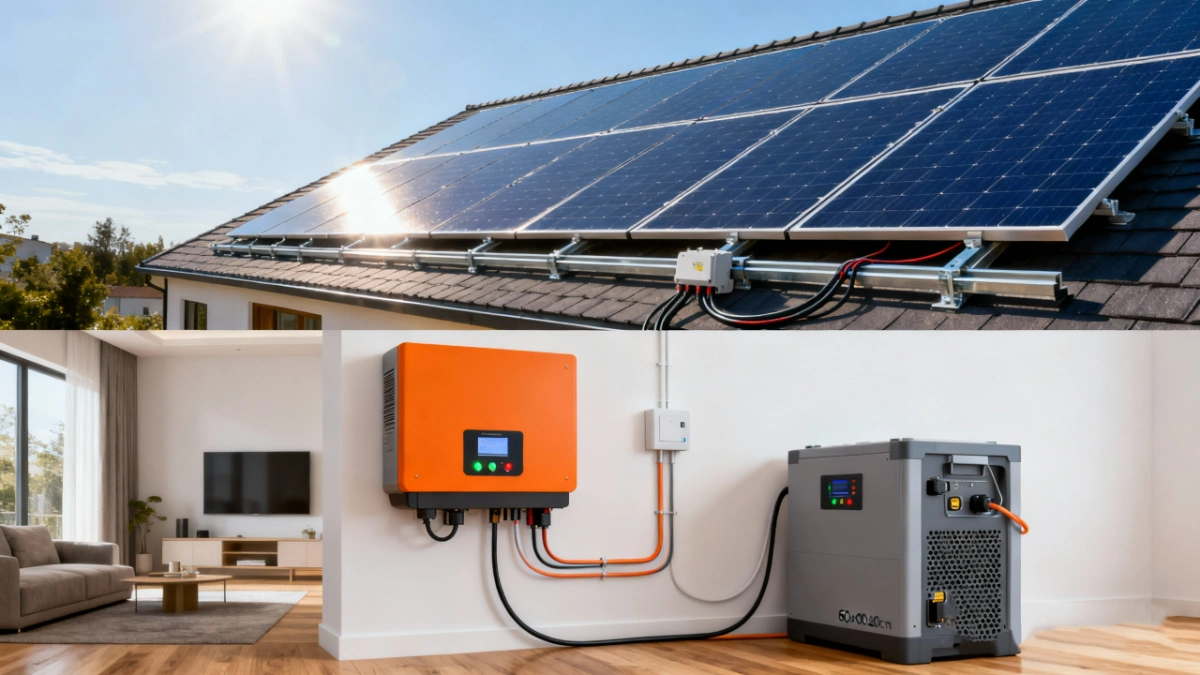
Choosing the Right Inverter
| Goal | Recommended Inverter |
|---|---|
| Reduce electricity bills | On-Grid |
| Need backup + savings | Hybrid |
| No grid available | Off-Grid |
FAQ
Conclusion
Choosing the right inverter depends on your location, budget, and backup needs.
– On-Grid: Low cost & bill reduction
– Hybrid: Backup + savings
– Off-Grid: Full independence